Quick answer
Approve a repair plan alongside the zipper specification. Record the zipper family and length by garment size, identify the parts a repairer can replace, and check access on a development garment. A matching pull, a compatible slider and a complete separating zipper solve different failures. Agree who holds the spares and who checks the garment after repair.
The question behind this guide
What should a brand agree before ordering zip hoodies it intends to repair?
A November 2026 French study for Refashion gives buyers a reason to ask how garments can stay in use. It surveyed attitudes about clothing and footwear and did not measure repair demand for any particular hoodie.
This checklist separates component compatibility, garment construction and after-sales responsibility. The actual garment still needs its own review.
Key takeaways
- Name the complete zipper system and its approved revision.
- Decide which faults can be serviced without opening the garment.
- Keep compatible parts and an identified repair route.
- Check the repaired garment before making a service promise.
Identify what needs replacing
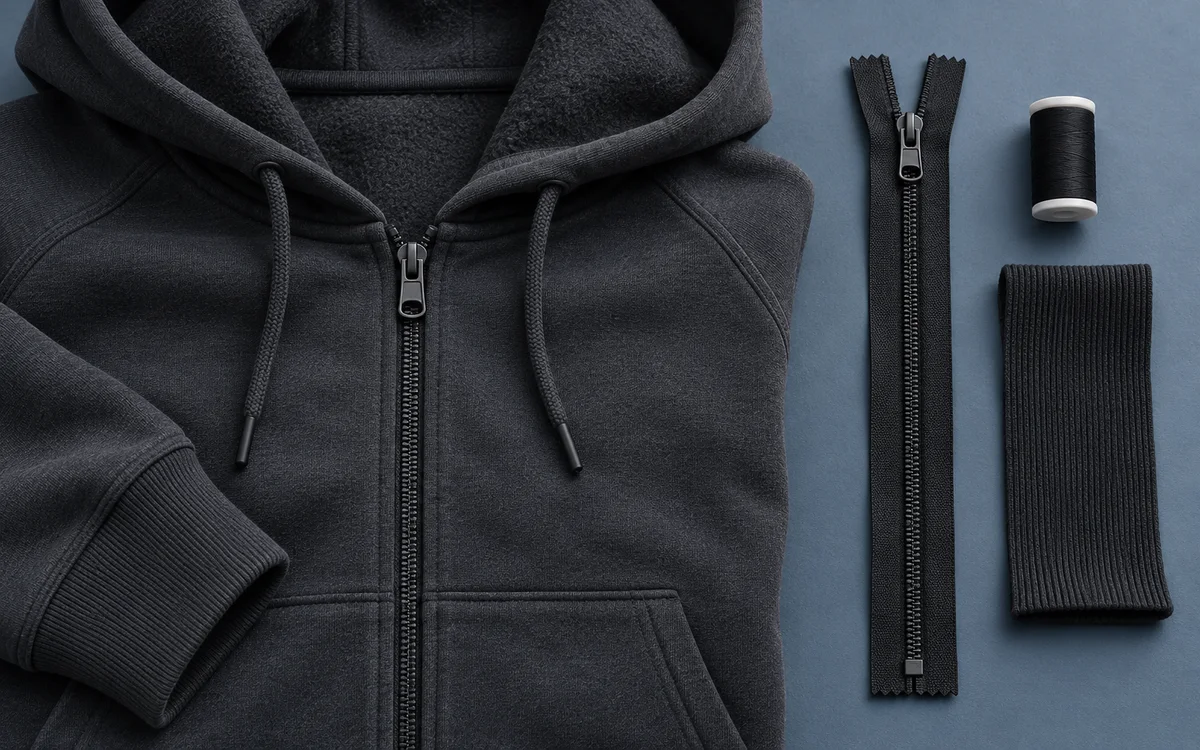
A pull is the piece you grip. The slider moves along the chain and joins or separates the two sides. A separating front zipper also has an insertion pin and box at the bottom. Identify the failure before ordering a spare. A slider cannot repair a damaged chain or restore a torn attachment area.
| Observed fault | Part or route to check | Buyer evidence |
|---|---|---|
| Pull missing; slider intact | Compatible replacement pull | Pull attachment and operation |
| Chain opens behind the slider | Check slider and chain condition first | Exact slider and chain family plus an operation check |
| Broken elements, damaged tape or failed bottom assembly | Ask a repairer to assess complete zipper replacement | Zipper length, separating configuration, access and seam condition |
Record spare parts alongside the bill of materials
Ask the trim supplier for the chain family, slider reference, finish, separating configuration and approved component compatibility. Record tape colour and finished zipper length for each garment size. Photograph both ends and the slider with the garment reference. A nominal size or a photo alone does not establish compatibility.
Ask the quotation to distinguish fitted trims from spare pulls, sliders and complete zippers. If extras are included, agree counts, pack labels and stock ownership. If spares will be ordered later, confirm how the supplier can identify the matching version and check availability.
Check access on the development garment
Inspect the zipper ends, facings, hem rib and any tape covering the stitching. Ask the repairer which seams or trims need to be opened for full replacement. A clean finish may be serviceable but take more time to restore than a simpler assembly.
Use a designated development garment to try the planned replacement. Check front edge alignment, bottom insertion, fabric catching, stitching and outside appearance. Keep the before-and-after record with the component references. Agree care or use checks separately.
- Show the repairer both sides of the garment.
- Record access points and parts removed.
- Check operation and finish against the approved reference.
Plan for changes on repeat orders
If a later order changes the zipper supplier or chain, check it against the spares already on hand. Keep the old and new versions separate in the service inventory until compatibility has been confirmed. A garment that looks the same from the outside can still need a different slider.
Assign responsibility before making a service promise
Decide whether a store, local repairer or your own team diagnoses faults and holds parts. Keep a lookup from garment style and size to zipper version. Set a route for cases with fabric damage or unavailable parts. A serviceable construction is useful only if there is a workable repair route.
This guide covers ordinary zip hoodies. It does not validate a sealed or protective garment, predict service life or quantify environmental savings. A construction change or trim substitution calls for another compatibility review.
Planning a zip hoodie range? Share the target sizes, zipper style and after-sales plan with SenLin. Ask which component and spare options can be confirmed for your order.
Continue your buyer research
Connect this decision to the relevant product, factory process and frequently asked questions before requesting a quotation.
Frequently asked questions
Can I buy a universal replacement slider?
Do not assume compatibility. Check the chain family, supplier and slider reference, then verify operation on the actual zipper.
Do I need a spare full zipper for every size?
Work from the lengths used in the size range. Agree which lengths will be stocked and which can be ordered later.
Is a new slider enough if the zipper separates behind it?
Only if the slider is the cause and the chain and attachment are sound. Check the damage before choosing a part.
Does a spare-parts list prove the garment is repairable?
It helps with identification. Also verify access, availability, the repair process and the condition after the work.
What should I send when requesting a quote?
Send the style, size range, intended finish and repair scenarios. Ask the factory to distinguish garment trims from any separately quoted spares.
Sources and evidence notes
- Consumer survey, published 3 November 2026Ipsos — French clothing and footwear consumer study
- Component manufacturer guidance for its own productYKK — Replacement slider compatibility and checks
- Brand repair guidance; garment construction variesPatagonia — Zipper diagnosis and repair